Sunday, February 23, 2025

What Joseph Knew that Enabled Him to Move Past the Past and Prosper


What Joseph Knew that Enabled Him to Look Past the Past and Prosper

Swanson, John August. Story of Joseph, from Art in the Christian Tradition, a project of the Vanderbilt Divinity Library, Nashville, TN. https://diglib.library.vanderbilt.edu/act-imagelink.pl?RC=56562 [retrieved February 23, 2025]. Original source: Estate of John August Swanson, https://www.johnaugustswanson.com/.


Genesis 45:3–11, New Revised Standard Version Updated Edition
Joseph said to his brothers, “I am Joseph. Is my father still alive?” But his brothers could not answer him, so dismayed were they at his presence.
Then Joseph said to his brothers, “Come closer to me.” And they came closer. He said, “I am your brother, Joseph, whom you sold into Egypt. And now do not be distressed or angry with yourselves because you sold me here, for God sent me before you to preserve life. For the famine has been in the land these two years, and there are five more years in which there will be neither plowing nor harvest. God sent me before you to preserve for you a remnant on earth and to keep alive for you many survivors. So it was not you who sent me here but God; he has made me a father to Pharaoh and lord of all his house and ruler over all the land of Egypt. Hurry and go up to my father and say to him, ‘Thus says your son Joseph, God has made me lord of all Egypt; come down to me; do not delay. You shall settle in the land of Goshen, and you shall be near me, you and your children and your children’s children, as well as your flocks, your herds, and all that you have. I will provide for you there, since there are five more years of famine to come, so that you and your household and all that you have will not come to poverty.’
And he kissed all his brothers and wept upon them, and after that his brothers talked with him.


My Notes

Photo by Scott Graham on Unsplash

1. Joseph knew that people could change.

He had; his brothers may have.

We are not the same people we used to be. That is true of others as well.

Photo by Mohamed Nohassi on Unsplash

2. Joseph knew that God could take what people mean for evil and use it for good.

The intention of evil is not the last word about how the events of our life will pave the way for the future.

3. Furthermore, Joseph knew that all evil has an expiration date.

The old passes. The new comes.

Evil deeds and people pass away.

Psalm 37:1–11, New Revised Standard Version Updated Edition

Do not fret because of the wicked;
 do not be envious of wrongdoers,
for they will soon fade like the grass
 and wither like the green herb.
Trust in the Lord and do good;
 live in the land and enjoy security.
Take delight in the Lord,
 and he will give you the desires of your heart.
Commit your way to the Lord;
 trust in him, and he will act.
He will make your vindication shine like the light
 and the justice of your cause like the noonday.
Be still before the Lord, and wait patiently for him;
 do not fret over those who prosper in their way,
 over those who carry out evil devices.
Refrain from anger and forsake wrath.
 Do not fret — it leads only to evil.
For the wicked shall be cut off,
 but those who wait for the Lord shall inherit the land.
Yet a little while, and the wicked will be no more;
 though you look diligently for their place, they will not be there.
But the meek shall inherit the land
 and delight themselves in abundant prosperity.

Psalm 37:39–40, New Revised Standard Version Updated Edition

The salvation of the righteous is from the Lord;
 he is their refuge in the time of trouble.
The Lord helps them and rescues them;
 he rescues them from the wicked and saves them
 because they take refuge in him.

4. Joseph knew that the big picture was more important than any small flaws.

Flaws do not define outcomes or the long view. What is temporarily a hindrance, may be the gateway to new possibilities.

Photo by Collab Media on Unsplash

5. Joseph knew that the people God really uses rise above pettiness.

That was a major factor in his success. In every bad situation, Joseph bloomed wherever he was planted.
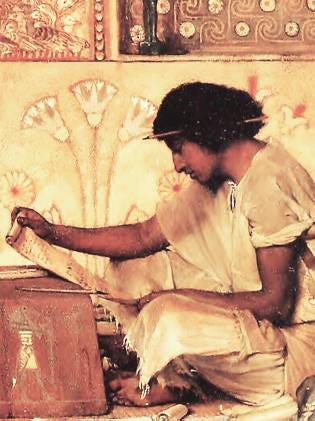
6. Joseph somehow knew that there was a different sort of life to be lived.

Later on, Jesus would expand upon this lesson, calling us to its radical implications.
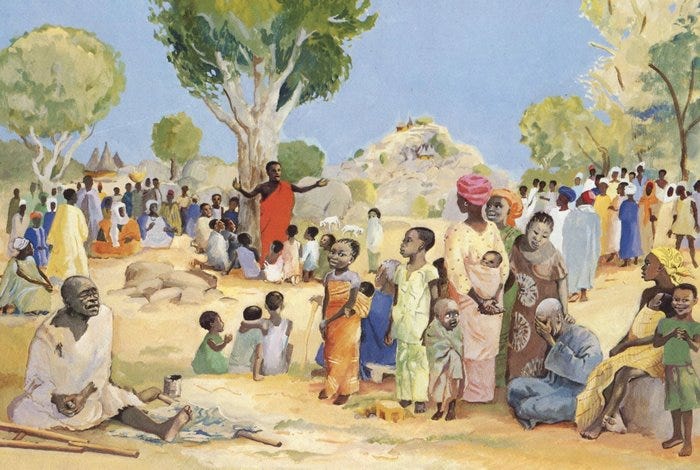
JESUS MAFA. from Art in the Christian Tradition, a project of the Vanderbilt Divinity Library, Nashville, TN. https://diglib.library.vanderbilt.edu/act-imagelink.pl?RC=48395 [retrieved February 23, 2025]. Original source: http://www.librairie-emmanuel.fr (contact page: https://www.librairie-emmanuel.fr/contact).

Luke 6:27–38, New Revised Standard Version Updated Edition

“But I say to you who are listening: Love your enemies; do good to those who hate you; bless those who curse you; pray for those who mistreat you. If anyone strikes you on the cheek, offer the other also, and from anyone who takes away your coat do not withhold even your shirt. Give to everyone who asks of you, and if anyone takes away what is yours, do not ask for it back again. Do to others as you would have them do to you.
“If you love those who love you, what credit is that to you? For even sinners love those who love them. If you do good to those who do good to you, what credit is that to you? For even sinners do the same. If you lend to those from whom you expect to receive payment, what credit is that to you? Even sinners lend to sinners, to receive as much again. Instead, love your enemies, do good, and lend, expecting nothing in return. Your reward will be great, and you will be children of the Most High, for he himself is kind to the ungrateful and the wicked. Be merciful, just as your Father is merciful.
“Do not judge, and you will not be judged; do not condemn, and you will not be condemned. Forgive, and you will be forgiven; give, and it will be given to you. A good measure, pressed down, shaken together, running over, will be put into your lap, for the measure you give will be the measure you get back.”

7. Joseph knew that God gets the last word and it is Life

The doctrine of resurrection blows all preliminary assessments of success and failure out of the water.

It is the ultimate game-changer.

1 Corinthians 15:35–38, New Revised Standard Version Updated Edition

But someone will ask, “How are the dead raised? With what kind of body do they come?” Fool! What you sow does not come to life unless it dies. And as for what you sow, you do not sow the body that is to be but a bare seed, perhaps of wheat or of some other grain. But God gives it a body as he has chosen and to each kind of seed its own body.
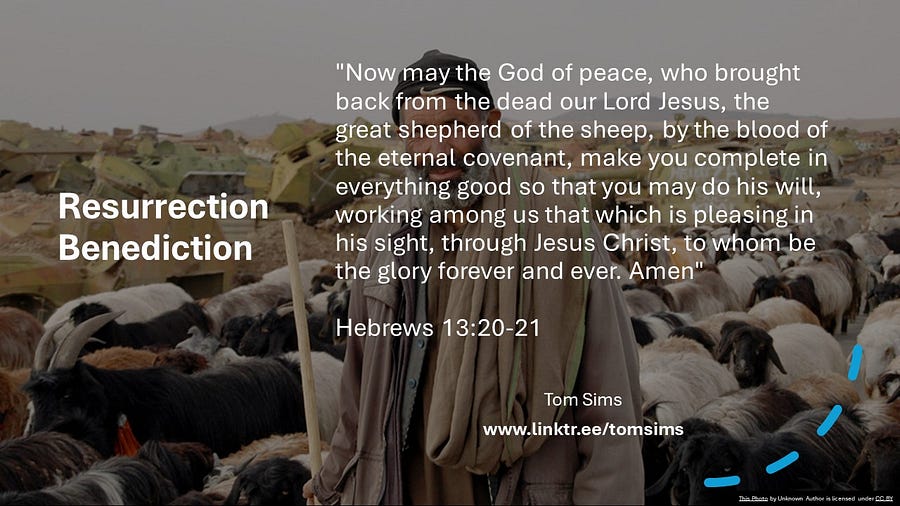
1 Corinthians 15:42–50, New Revised Standard Version Updated Edition

So it is with the resurrection of the dead. What is sown is perishable; what is raised is imperishable. It is sown in dishonor; it is raised in glory. It is sown in weakness; it is raised in power. It is sown a physical body; it is raised a spiritual body. If there is a physical body, there is also a spiritual body. Thus it is written, “The first man, Adam, became a living being”; the last Adam became a life-giving spirit. But it is not the spiritual that is first but the physical and then the spiritual. The first man was from the earth, made of dust; the second man is from heaven. As one of dust, so are those who are of the dust, and as one of heaven, so are those who are of heaven. Just as we have borne the image of the one of dust, we will also bear the image of the one of heaven.
What I am saying, brothers and sisters, is this: flesh and blood cannot inherit the kingdom of God, nor does the perishable inherit the imperishable.

What will you do with this?


Tuesday, February 18, 2025

Sunday, February 16, 2025

Blessings and Curses

Blessings and Curses 

You might say that blessings and curses are two different experiences of the same reality. The ultimate reality is God, revealed, present, speaking, acting in history, confronting us in our lives. The experience of God is  how we respond.

That determines whether an encounter with God is a blessing or a curse. 

Jeremiah 17:5-10

Those who trust the Lord are like trees 

Thus says the LORD: Cursed are those who trust in mere mortals and make mere flesh their strength, whose hearts turn away from the LORD. They shall be like a shrub in the desert and shall not see when relief comes. They shall live in the parched places of the wilderness, in an uninhabited salt land. 

Blessed are those who trust in the LORD, whose trust is the LORD. They shall be like a tree planted by water, sending out its roots by the stream. It shall not fear when heat comes, and its leaves shall stay green; in the year of drought it is not anxious, and it does not cease to bear fruit. 

The heart is devious above all else; it is perverse-- who can understand it? I the LORD test the mind and search the heart, to give to all according to their ways, according to the fruit of their doings.

So, we have trees and bushes here.

Trees trust God. Bushes trust mortals.

Psalm 1

Happy are those

    who do not follow the advice of the wicked

or take the path that sinners tread

    or sit in the seat of scoffers,

but their delight is in the law of the Lord,

    and on his law they meditate day and night.

They are like trees

    planted by streams of water,

which yield their fruit in its season,

    and their leaves do not wither.

In all that they do, they prosper.


The wicked are not so

    but are like chaff that the wind drives away.

Therefore the wicked will not stand in the judgment

    nor sinners in the congregation of the righteous,

for the Lord watches over the way of the righteous,

    but the way of the wicked will perish.

Here, we have trees that prosper and trees that perish.

One trusts and delights in God's ways and words. The other in the counsel of the wicked.

What does Jesus say?

Luke 6:17-26

He came down with them and stood on a level place with a great crowd of his disciples and a great multitude of people from all Judea, Jerusalem, and the coast of Tyre and Sidon. They had come to hear him and to be healed of their diseases, and those who were troubled with unclean spirits were cured. And everyone in the crowd was trying to touch him, for power came out from him and healed all of them.

 Then he looked up at his disciples and said:

 “Blessed are you who are poor,

    for yours is the kingdom of God.

“Blessed are you who are hungry now,

    for you will be filled.

“Blessed are you who weep now,

    for you will laugh.

 “Blessed are you when people hate you and when they exclude you, revile you, and defame you on account of the Son of Man. Rejoice on that day and leap for joy, for surely your reward is great in heaven, for that is how their ancestors treated the prophets.

 “But woe to you who are rich,

    for you have received your consolation.

“Woe to you who are full now,

    for you will be hungry.

“Woe to you who are laughing now,

    for you will mourn and weep.

 “Woe to you when all speak well of you, for that is how their ancestors treated the false prophets.

For Jesus, there are the simple folks who are coming to him with real life problems and trusting him to bring them healing and meaning. On the other hand, there are the self sufficient ones, who are avoiding their own vulnerabilities and rejecting any feeling for the poor and broken of the world.

"I am fine. Why aren't you?"

Is there a common thread?

The Number two is in common.

There are two lenses through which we view our realities, desires, and values.

“… his delight is in the law of the LORD; and in his law doth he meditate day and night.” – Psalm 1:2 (KJV)

Delight and meditation are the two greatest determinants of a healthy digestion of scripture in our lives. They enable us to allow the Word of God to get into every area of our lives and transform us into strong, stable followers of Jesus.

We stand strong, bring forth fruit, experience ongoing vitality, and prosper in those things that we are prompted by the Spirit of God to do.

When we delight in God’s Word, we hunger and thirst for it. We are drawn toward it. We crave it and enjoy it. We find warmth and light in it. We find ourselves getting excited about new insights and glimpses into the heart of God.

That is how we take it in.

Then, we mediate upon it. We receive it and we take a stroll with it, mulling it over, praying about it, and applying it to our lives.

Oh to be so captivated by a single verse in a day that it grips the soul and sinks deeply into our consciousness! If we could live with that morsel of spiritual food for a day and properly assimilate it into our lives, we would be taken to a new plane.

“For the LORD knoweth the way of the righteous.” (KJV)

In our delight and meditation, we are not merely engaging in mental exercise. God is present and aware and He enters into the process.

Open the Word. Let your eyes take it into your heart. Find the joy in what you receive. Then turn it over and over in your thoughts until it marinates your entire being.

You will be blessed.

In today's epistle from 1 Corinthians 15:12-20, there is a great resolution, and it is in the reality of the resurrection of Jesus and the promise of resurrection for his people.

Now if Christ is proclaimed as raised from the dead, how can some of you say there is no resurrection of the dead? If there is no resurrection of the dead, then Christ has not been raised, and if Christ has not been raised, then our proclamation is in vain and your faith is in vain. We are even found to be misrepresenting God, because we testified of God that he raised Christ—whom he did not raise if it is true that the dead are not raised. For if the dead are not raised, then Christ has not been raised. If Christ has not been raised, your faith is futile, and you are still in your sins. Then those also who have died in Christ have perished. If for this life only we have hoped in Christ, we are of all people most to be pitied.

 But in fact Christ has been raised from the dead, the first fruits of those who have died.

Let’s end where we began:

You might say that blessings and curses are two different experiences of the same reality. The ultimate reality is God, revealed, present, speaking, acting in history, confronting us in our lives. The experience of God is  how we respond.

That determines whether an encounter with God is a blessing or a curse.

That is a choice.

Tuesday, February 11, 2025

Sunday, February 09, 2025

Sunday, February 02, 2025

Friday, January 31, 2025

Bbile Chat for January 31


Today's Readings from the Common Revised Common Lectionary https://www.biblegateway.com/passage/?search=psalm%2040%2C%20psalm%2054%2C%20Isaiah%2050%3A1-11%2C%20Galatians%203%3A15-22%2C%20Mark%206%3A47-56&version=NRSVUE,NIV,MSG,ESV,NLT Share on or from YouTube: https://youtu.be/-IkUABAt6Fc Psalm 40 New Revised Standard Version Updated Edition To the leader. Of David. A Psalm. I waited patiently for the Lord; he inclined to me and heard my cry. He drew me up from the desolate pit, out of the miry bog, and set my feet upon a rock, making my steps secure. He put a new song in my mouth, a song of praise to our God. Many will see and fear and put their trust in the Lord. Happy are those who make the Lord their trust, who do not turn to the proud, to those who go astray after false gods. You have multiplied, O Lord my God, your wondrous deeds and your thoughts toward us; none can compare with you. Were I to proclaim and tell of them, they would be more than can be counted. Sacrifice and offering you do not desire, but you have given me an open ear. Burnt offering and sin offering you have not required. Then I said, “Here I am; in the scroll of the book it is written of me. I delight to do your will, O my God; your law is within my heart.” I have told the glad news of deliverance in the great congregation; see, I have not restrained my lips, as you know, O Lord. I have not hidden your saving help within my heart; I have spoken of your faithfulness and your salvation; I have not concealed your steadfast love and your faithfulness from the great congregation. Do not, O Lord, withhold your mercy from me; let your steadfast love and your faithfulness keep me safe forever. For evils have encompassed me without number; my iniquities have overtaken me until I cannot see; they are more than the hairs of my head, and my heart fails me. Be pleased, O Lord, to deliver me; O Lord, make haste to help me. Let all those be put to shame and confusion who seek to snatch away my life; let those be turned back and brought to dishonor who desire my hurt. Let those be appalled because of their shame who say to me, “Aha, Aha!” But may all who seek you rejoice and be glad in you; may those who love your salvation say continually, “Great is the Lord!” As for me, I am poor and needy, but the Lord takes thought for me. You are my help and my deliverer; do not delay, O my God. Psalm 54 New Revised Standard Version Updated Edition To the leader: with stringed instruments. A Maskil of David, when the Ziphites went and told Saul, “David is in hiding among us.” Save me, O God, by your name, and vindicate me by your might. Hear my prayer, O God; give ear to the words of my mouth. For the insolent have risen against me; the ruthless seek my life; they do not set God before them. Selah But surely, God is my helper; the Lord is the upholder of my life. He will repay my enemies for their evil. In your faithfulness, put an end to them. With a freewill offering I will sacrifice to you; I will give thanks to your name, O Lord, for it is good. For he has delivered me from every trouble, and my eye has looked in triumph on my enemies. Isaiah 50 New Revised Standard Version Updated Edition Thus says the Lord: Where is your mother’s bill of divorce with which I dismissed her? Or which of my creditors is it to whom I have sold you? No, because of your sins you were sold, and for your transgressions your mother was dismissed. Why was no one there when I came? Why did no one answer when I called? Is my arm powerless to redeem? Or have I no strength to deliver? By my rebuke I dry up the sea; I make the rivers a desert, so that their fish stink for lack of water and die of thirst. I clothe the heavens with blackness and make sackcloth their covering. The Lord God has given me a trained tongue, that I may know how to sustain the weary with a word. Morning by morning he wakens, wakens my ear to listen as those who are taught. The Lord God has opened my ear, and I was not rebellious; I did not turn backward. I gave my back to those who struck me and my cheeks to those who pulled out the beard; I did not hide my face from insult and spitting. The Lord God helps me; therefore I have not been disgraced; therefore I have set my face like flint, and I know that I shall not be put to shame; he who vindicates me is near. Who will contend with me? Let us stand in court together. Who are my adversaries? Let them confront me. It is the Lord God who helps me; who will declare me guilty? All of them will wear out like a garment; the moth will eat them up. Who among you fears the Lord and obeys the voice of his servant, who walks in darkness and has no light, yet trusts in the name of the Lord and relies upon his God? But all of you are kindlers of fire, lighters of firebrands. Walk in the flame of your fire and among the brands that you have kindled! This is what you shall have from my hand: you shall lie down in torment. Galatians 3:15-22 New Revised Standard Version Updated Edition Brothers and sisters, I give an example from daily life: once a person’s will has been ratified, no one adds to it or annuls it. Now the promises were made to Abraham and to his offspring; it does not say, “And to offsprings,” as of many, but it says, “And to your offspring,” that is, to one person, who is Christ. My point is this: the law, which came four hundred thirty years later, does not annul a covenant previously ratified by God, so as to nullify the promise. For if the inheritance comes from the law, it no longer comes from the promise, but God granted it to Abraham through the promise. Why then the law? It was added because of transgressions, until the offspring would come to whom the promise had been made, and it was ordained through angels by a mediator. Now a mediator involves more than one party, but God is one. Is the law then opposed to the promises of God? Certainly not! For if a law had been given that could make alive, then righteousness would indeed come through the law. But the scripture has imprisoned all things under the power of sin, so that what was promised through the faith of Jesus Christ might be given to those who believe. Mark 6:47-56 New Revised Standard Version Updated Edition When evening came, the boat was out on the sea, and he was alone on the land. When he saw that they were straining at the oars against an adverse wind, he came toward them early in the morning, walking on the sea. He intended to pass them by. But when they saw him walking on the sea, they thought it was a ghost and cried out, for they all saw him and were terrified. But immediately he spoke to them and said, “Take heart, it is I; do not be afraid.” Then he got into the boat with them, and the wind ceased. And they were utterly astounded, for they did not understand about the loaves, but their hearts were hardened. When they had crossed over, they came to land at Gennesaret and moored the boat. When they got out of the boat, people at once recognized him and rushed about that whole region and began to bring the sick on mats to wherever they heard he was. And wherever he went, into villages or cities or farms, they laid the sick in the marketplaces and begged him that they might touch even the fringe of his cloak, and all who touched it were healed.

Saturday, August 11, 2007

Luke 6:37 - 45

Luke 6: 37-42 – Self-Checks and Restraint

Central Truth: Take care of your spiritual health and leave judgment to God.

Luke 6:37-42 "Do not judge, and you will not be judged. Do not condemn, and you will not be condemned. Forgive, and you will be forgiven. 38 - Give, and it will be given to you. A good measure, pressed down, shaken together and running over, will be poured into your lap. For with the measure you use, it will be measured to you."
39 - He also told them this parable: "Can a blind man lead a blind man? Will they not both fall into a pit? 40 - A student is not above his teacher, but everyone who is fully trained will be like his teacher.
41 - "Why do you look at the speck of sawdust in your brother's eye and pay no attention to the plank in your own eye? 42 - How can you say to your brother, 'Brother, let me take the speck out of your eye,' when you yourself fail to see the plank in your own eye? You hypocrite, first take the plank out of your eye, and then you will see clearly to remove the speck from your brother's eye.

Read Verses 37-38.
  • What is the essence of Jesus’ teaching in these verses?
  • How would you define/explain these words?
  1. Judge
  2. Condemn
  3. Forgive
  4. Give
  • What does Jesus mean when He says that the way we give will come back to us?
  • How have you found this to be true?
  • What does this kind of generous living have to do with refusal to judge and condemn?
  • How hard is all of this?

Read Verses 39-40.
  • What are some ways that “the blind try to lead the blind” in our day and time?
  • Are there some areas in which you are blind?
  • What are the dangers?
  • What does verse 40 mean to you? How can we be fully trained to be like our teacher?

Read Verses 41-42.
  • What are some ways that we are guilty of what Jesus describes here?
  • Where does the concept of pride fit in here and how is it a hindrance to our spiritual health and ministry to others?
  • How can we avoid this pitfall?
  • What does this teach us about the importance of taking care of our spiritual health for the sake of others? How does the idea of humility fit in here?
  • What will you do this week for your spiritual health?

Luke 6: 43-45 – Fruit and Thorns

Central Truth: Take care of your spiritual health and leave judgment to God.

43 - "No good tree bears bad fruit, nor does a bad tree bear good fruit. 44 - Each tree is recognized by its own fruit. People do not pick figs from thornbushes, or grapes from briers. 45 - The good man brings good things out of the good stored up in his heart, and the evil man brings evil things out of the evil stored up in his heart. For out of the overflow of his heart his mouth speaks.


  • What factors determine the nature of the fruit a tree bears (genetics, soil, etc…)? What factors determine the nature of the fruit a Christian bears?
  • Describe “good fruit” vs. “bad fruit.”
  • How is fruit recognized? What are some outward ways Christians are ‘known” by the world and/or by other Christians? Don’t give “Sunday School” answers here. Dig deep.
  • Paraphrase and apply verse 44.
  • Paraphrase and apply verse 45.
  • What does it mean to store “good things” or “bad things” in ones heart? What are some good things you want to store in your heart? How can and will you do so?
  • Have you ever experienced speaking out of the overflow of your heart? Describe the experience.
  • Develop a group strategy for encouraging good fruit in each others lives.

Friday, March 16, 2007

Luke 6: 27-36 – Loving Our Enemies

Central Truth: Jesus calls us to live a life that is categorical different from what the world calls “normal.”.

“…Jesus offers what became known in the sixteenth century as the "golden rule": Do to others as you would have them do to you. The verse has Old Testament roots (Lev 19:18). In addition, numerous such ethical statements existed in ancient Jewish and Greek culture. Jesus' formulation of the rule, however, is the least self-focused. Jesus is not saying, "Do good deeds for others so they will return the favor." Instead he is calling for actions of love regardless of how the other responds. Nor is he saying, "Think of what you like, then do that for others." Rather, we are to be sensitive to the needs, feelings and concerns of others and seek to meet them. Sensitivity in love means listening and serving. This does not mean ignoring moral limits, as Jesus' own ministry makes clear, but it does mean caring enough to be concerned about how others feel. The old adage "walk a mile in my shoes" may fit here: look at things from another's perspective and then act with concern.” – Intervarsity Bible Commentary


Verses 27-31 - 27 - "But I tell you who hear me: Love your enemies, do good to those who hate you, 28 - bless those who curse you, pray for those who mistreat you. 29 - If someone strikes you on one cheek, turn to him the other also. If someone takes your cloak, do not stop him from taking your tunic. 30 - Give to everyone who asks you, and if anyone takes what belongs to you, do not demand it back. 31 - Do to others as you would have them do to you.

The three examples Jesus gives us are illustrations of situations where we must love our enemies and how we might respond in those situations:

  1. The fist had to do with rejection – perhaps rejection based upon our role as followers of Jesus. A slap with the back of the hand would be a way of symbolizing exclusion from the synagogue.
  2. The situation is theft of personal belongings – perhaps while we are in the course of doing missionary work. This happened to us in Mexico several years ago where we had money stolen from our van. We were vulnerable and had the choice to stop giving or continuing to give, risk, and share the love of Jesus. We chose to continue.
  3. The third situation is the occasion to be generous with others without keeping a running account.

The overriding principle is love as summarized in the Golden Rule.

From The Message: 27-30 – “"To you who are ready for the truth, I say this: Love your enemies. Let them bring out the best in you, not the worst. When someone gives you a hard time, respond with the energies of prayer for that person. If someone slaps you in the face, stand there and take it. If someone grabs your shirt, giftwrap your best coat and make a present of it. If someone takes unfair advantage of you, use the occasion to practice the servant life. No more tit-for-tat stuff. Live generously. “

"Here is a simple rule of thumb for behavior: Ask yourself what you want people to do for you; then grab the initiative and do it for them!

q Read verse 27 in both translations. What are some ways that God can use or has used enemies to bring out the best in you and others?

q What are some practical ways that we can do good to those who hate us?

q Why is this diffcult? Where can we get the strength to follow this teaching of Jesus?

q In v. 28, Jesus advises us to have two love responses to our enemies: (1) Bless them, (2) Pray for them. What are some practical ways of accomplishing these actions?

q Look at the three examples of practical applications of the principle in verses 27-30. Which of these is most challenging and why? Which have you experienced and how? What was the outcome?

q Why is verse 31 often called “the Golden Rule?” What does it mean to you?

q The Message says – “Grab the initiative.” How important is that and what effect/affect can it have on others?

Verses 31-36 - 32 - "If you love those who love you, what credit is that to you? Even 'sinners' love those who love them. 33 - And if you do good to those who are good to you, what credit is that to you? Even 'sinners' do that. 34 - And if you lend to those from whom you expect repayment, what credit is that to you? Even 'sinners' lend to 'sinners,' expecting to be repaid in full. 35 - But love your enemies, do good to them, and lend to them without expecting to get anything back. Then your reward will be great, and you will be sons of the Most High, because he is kind to the ungrateful and wicked. 36 - Be merciful, just as your Father is merciful.

Here Jesus teaches through restating in the context of this statement that I paraphrase: It is no big deal or credit to you to love the loveable. You are called to be different like your Father. Living that way brings great rewards.”

From The Message: 32-36 – “If you only love the lovable, do you expect a pat on the back? Run-of-the-mill sinners do that. If you only help those who help you, do you expect a medal? Garden-variety sinners do that. If you only give for what you hope to get out of it, do you think that's charity? The stingiest of pawnbrokers does that. I tell you, love your enemies. Help and give without expecting a return. You'll never—I promise—regret it. Live out this God-created identity the way our Father lives toward us, generously and graciously, even when we're at our worst. Our Father is kind; you be kind.“

q What are some rewards of living this way? Are any of them earthly rewards? Explain.

q Describe mercy. How have you received mercy?

q What, from this scripture, is our prime motivation for living a life of mercy?

What are some ways we can practice mercy and kindness this week

People I Can “Bless” How I Can Bless Them


Sunday, March 11, 2007

Luke 6:17-26

Discussion:

Verses 17-19: He went down with them and stood on a level place. A large crowd of his disciples was there and a great number of people from all over Judea, from Jerusalem, and from the coast of Tyre and Sidon, who had come to hear him and to be healed of their diseases. Those troubled by evil spirits were cured, and the people all tried to touch him, because power was coming from him and healing them all.

q How would you describe this scene in your own words? What if it were to be set in America in our times?

q What do you think it means when he says that power was coming from Him? What would it mean today?

q Have you ever felt power come from you?

Verses 20-22: Looking at his disciples, he said:
"Blessed are you who are poor,
for yours is the kingdom of God.
Blessed are you who hunger now,
for you will be satisfied.
Blessed are you who weep now,
for you will laugh.
Blessed are you when men hate you,
when they exclude you and insult you
and reject your name as evil, because of the Son of Man.

q What does the word, “blessed” mean ?

q Read The Message. How would you paraphrase these verses for your own life?

q What do we learn here about humility and dependence on God?

Verses 23-26: "Rejoice in that day and leap for joy, because great is your reward in heaven. For that is how their fathers treated the prophets.
"But woe to you who are rich,
for you have already received your comfort.
Woe to you who are well fed now,
for you will go hungry.
Woe to you who laugh now,
for you will mourn and weep.
Woe to you when all men speak well of you,
for that is how their fathers treated the false prophets.

q What do the woes teach us about the dangers of becoming callous and comfortable??

q Read The Message. How would you paraphrase these verses for your own life?

q What will you apply from these verses?

Friday, March 09, 2007

Luke 6:12-16 – Choosing the 12

Central Truth: Jesus specifically, prayerfully, and deliberately chose those who he would call to discipleship..

12 - One of those days Jesus went out to a mountainside to pray, and spent the night praying to God. 13 - When morning came, he called his disciples to him and chose twelve of them, whom he also designated apostles: 14 - Simon (whom he named Peter), his brother Andrew, James, John, Philip, Bartholomew, 15 - Matthew, Thomas, James son of Alphaeus, Simon who was called the Zealot, 16 - Judas son of James, and Judas Iscariot, who became a traitor.

(NIV), © 1984, International Bible Society

Discussion Questions:

q Tell about a time when you had a decision to make that was so important that you withdrew yourself from people and activities to spend a significant period of time in prayer. How did God guide you?

q What are some decisions about which we need this kind of prayer?

q Why was the choosing of the 12 so important in Jesus’ ministry? How is it important to us?

q With which of the 12 do you most identify? Why. What others of the apostles have had a special impact on your life? How and why?

q What lessons have we learned from various apostles?

q In what ways does Jesus deliberately, specifically, and prayerfully call us today? In what ways and to what ministries have you sensed His call?

q What role do we have in calling disciples to Jesus? What can we learn from the way in which He went about this important work?

q For whom would you like to pray today that God will make His call clear?


Wednesday, March 07, 2007

Luke 6:1-9

Luke 6:1-2 - -1 One Sabbath Jesus was going through the grainfields, and his disciples began to pick some heads of grain, rub them in their hands and eat the kernels. 2 - Some of the Pharisees asked, "Why are you doing what is unlawful on the Sabbath?"

The Message: © 2002, Peterson: (1-2) On a certain Sabbath Jesus was walking through a field of ripe grain. His disciples were pulling off heads of grain, rubbing them in their hands to get rid of the chaff, and eating them. Some Pharisees said, "Why are you doing that, breaking a Sabbath rule?" (3-4 ) But Jesus stood up for them. "Have you never read what David and those with him did when they were hungry? How he entered the sanctuary and ate fresh bread off the altar, bread that no one but priests were allowed to eat? He also handed it out to his companions."

Verses 3-4 - 3 - Jesus answered them, "Have you never read what David did when he and his companions were hungry? 4 - He entered the house of God, and taking the consecrated bread, he ate what is lawful only for priests to eat. And he also gave some to his companions."

The Message: © 2002, Peterson: (3-4 ) But Jesus stood up for them. "Have you never read what David and those with him did when they were hungry? How he entered the sanctuary and ate fresh bread off the altar, bread that no one but priests were allowed to eat? He also handed it out to his companions."

One suspects that the disciples are doing what they have always done – feeding themselves whenever they were hungry. They were not Pharisees. Nor were they trained holy men. But now they were under a microscope because they were following Jesus. The Pharisees wonder why Jesus dos not rebuke their crude, irreverent, and “unlawful” behavior. His answer comes from 1 Samuel 21:1-7 and 22:9-10.He seems to suggest that people and their needs are more important than ritual regulations.

q Have you ever seen new believers criticized because they do not know and observe all the “house rules of decorum?”

q What are some traditions and rules that exist in churches that may not be biblically mandated but we use to judge people?

Verse 5-Then Jesus said to them, "The Son of Man is Lord of the Sabbath."

The Message: © 2002, Peterson: (5)Then he said, "The Son of Man is no slave to the Sabbath; he's in charge."

From the NIV Commentary: Jesus' analogy is neat, because it raises an example, sanctioned by Scripture, where the letter of the law was not kept. Thus Jesus becomes an interpreter of the law, either by interpreting its real intended scope or by bringing a new law that shows the old law is passing away. … the declaration of Jesus' authority is clear, for he explains, "The Son of Man is Lord of the Sabbath."

The question for us is this: Is Jesus Christ the Lord of all my religious beliefs, rules, practices, devotions, and “opinions” or am I trying to please someone else or meet some other standard.

q What does it mean for Jesus to be Lord of the Sabbath and Lord of all our religious practices.

NOTE: The Sabbath is a tricky issue and not really the core subject of this lesson. Sunday is not a Christian version of the Jewish Sabbath. The Jewish Sabbath is what it has always been. We are not under that covenant, but we are under the spirit of the law that teaches that one day out of seven should be devoted to rest and refreshment, physically and spiritually. Questions over whether to keep Saturday as a Sabbath, Sunday as a day of rest, or the Lord’s day as a day of worship and some other day as a day off can be handled at a later time.

Verses 6-8 - 6 - On another Sabbath he went into the synagogue and was teaching, and a man was there whose right hand was shriveled. 7 - The Pharisees and the teachers of the law were looking for a reason to accuse Jesus, so they watched him closely to see if he would heal on the Sabbath. 8 - But Jesus knew what they were thinking and said to the man with the shriveled hand, "Get up and stand in front of everyone." So he got up and stood there.

The Message: © 2002, Peterson: (6-8)On another Sabbath he went to the meeting place and taught. There was a man there with a crippled right hand. The religion scholars and Pharisees had their eye on Jesus to see if he would heal the man, hoping to catch him in a Sabbath infraction. He knew what they were up to and spoke to the man with the crippled hand: "Get up and stand here before us." He did.

Some people try to avoid controversy; Jesus invites it by His actions and does so intentionally to make a point. He could have waited a day to heal the man with the shriveled hand or He could have done so privately, but He wanted to teach this lesson. The religious people just wanted to catch Him. Jesus was not afraid of being “caught.”

q First: do we ever try to sneak around to do what we know is right because we are afraid of criticism? How is Jesus’ example different?

q What are some other reasons Jesus healed the man then and there?

Verse 9 - 9 - Then Jesus said to them, "I ask you, which is lawful on the Sabbath: to do good or to do evil, to save life or to destroy it?"

The Message: © 2002, Peterson: (9)Then Jesus addressed them, "Let me ask you something: What kind of action suits the Sabbath best? Doing good or doing evil? Helping people or leaving them helpless?"

q What are some good things that can be done on a holy day of rest?

q Which do you think Jesus felt was more important – helping people or dotting the letters of the law? Why?

q What contemporary applications might there be for this principle?

Verses 10-11 - 10 - He looked around at them all, and then said to the man, "Stretch out your hand." He did so, and his hand was completely restored. 11 - But they were furious and began to discuss with one another what they might do to Jesus.

The Message: © 2002, Peterson: (10-11) He looked around, looked each one in the eye. He said to the man, "Hold out your hand." He held it out—it was as good as new! They were beside themselves with anger, and started plotting how they might get even with him.

q Did Jesus do good or evil on that Sabbath?

q How about the Pharisees and religious leaders?

q What would be some good things we could do on the Lord’s day?

q How would you state the key principle(s) of this lesson?

q How would you apply them?

Scriptures are quoted from the New International Version, (NIV), © 1984, International Bible Society

Sunday, March 04, 2007

Luke 5:31-32

Verses 31- Jesus heard about it and spoke up, "Who needs a doctor: the healthy or the sick? (the Message)

Let us back up to go forward. After Levi throws his own, “I Have Decided to Follow Jesus Party” for his rowdy friends and Jesus attends, the religious leaders are offended. He restates His mission for them in no uncertain terms, making it clear that He has come for people who know that they have needs. Jesus is Lord over His own mission and over ours. He came to invite outsiders to come to Him.

q Have you ever offended any religious folks by doing what you knew to be your mission from Jesus Christ?

q How often do you go to the doctor? How do you know when you need to go?

q Have you ever needed medical attention, but believed you were perfectly healthy?

q What are some signs that people need a spiritual doctor these days? List some of them here:

o ______________________

o ______________________

o ______________________

o ______________________

o ______________________

q Discuss these words, “Jesus heard about it and spoke up. Are there some things that Christians do to exclude people that Jesus might want to speak up about these days?

q In what ways is Jesus like a doctor? What are some ways we can be on His healing team?

o ______________________

o ______________________

o ______________________

o ______________________

o ______________________

Verse 32 - I'm here inviting outsiders, not insiders—an invitation to a changed life, changed inside and out." (the Message)

Jesus had attended a party at the invitation of Levi in order to invite people to a changed life?

q What are some places we can go to find outsiders? How can we meet them?

q How can we develop our invitation to a changed life so that we are ready to offer it?

q What is an “outsider? Have you ever been one?

q What is it like to be changed inside and out?

Saturday, March 03, 2007

Luke 5:27-31

Verse 27 - Luke 5: 27 - After this, Jesus went out and saw a tax collector by the name of Levi sitting at his tax booth. "Follow me," Jesus said to him,

There is not a great deal that we know about Levi except what we learn here. Mark adds that he was the son of Alphaeus. Matthew calls him, “Matthew,” thus identifying himself. Mark does the same. We know that he became an apostle. We also know that James was also called the “son of Alphaeus.” Matthew was a tax collector. Rome auctioned off tax territories to various individuals. The tax-collectors would then gather the amount they had bid. After that, any money that was left over was their profit. There was a great deal of room for abuse in this system and most abused it Many tax collectors became rich by cheating and coercing people. Tax-collectors were considered to be so dishonest that they could not testify in courts of law. They were also considered to be traitors to Israel. This was the sort of man that Jesus zeroed in on that particular day and said, “Follow me.”

q Who are some people (and professions) that our society looks down upon these days and considers to be dishonest and unlikely to follow Jesus?

q Are you ever surprised when Jesus calls and uses certain people?

q Have you been surprised by the testimony of any “public” people lately?

q How can we avoid discounting or disqualifying anyone for kingdom service?

Verse 27 - 28 - and Levi got up, left everything and followed him.

There was such immediacy to Levi’s response. No hesitation is noted or recorded. No questions are asked and no price is spared. Levi leaves it all and that includes a very lucrative profession. One wonders what sort of experiences, teachings, or thoughts had prepared him for this moment. God is working behind the scenes in people’s lives in ways that may not be readily apparent. He is creating memories, frames of reference, and connecting points that lie dormant until the time when someone comes along and issues the call of Jesus to follow. We may be surprised at their receptive responses, but it is likely that they did not come to the point of receptivity over night. What is of most importance is that we, who know the Master, be as eager and ready to respond to His call as this tax collector was.

q Have you ever witnesses what seemed to be a “sudden conversion” in a person’s life? When? What was your response?

q Has Jesus ever called you to make a sudden change in your living circumstances in order to answer a call? Tell us about it.

q What would it be like to receive such a call today? Could you leave everything and follow Him?

29 - Then Levi held a great banquet for Jesus at his house, and a large crowd of tax collectors and others were eating with them. 30 - But the Pharisees and the teachers of the law who belonged to their sect complained to his disciples, "Why do you eat and drink with tax collectors and 'sinners'?"

Leaving everything apparently did not leave Levi homeless, but it meant that His home was now a place where he could invite all of his friends to meet Jesus. He filled his house with former business associates and other people of bad reputation. It was no doubt an unscrupulous, loud, and perhaps, vulgar company of people and Jesus was among them He did not compromise anything of His character by keeping company with this lot. He maintained His dignity, but He also bestowed dignity upon these who had become outcasts of religious society – just by His presence and acceptance of them as people of value. The religious contingent that had been stalking Him was incensed. Their impression of holy people was that they kept themselves removed from sinners. This was not the pattern of Jesus and it is not the pattern He has for us.

Note: It is important to consider the company we keep. This example does not negate the need for people to break old behavior patterns by breaking off certain old associations. What it does say, that the church cannot be the salt of the earth and the light of the world by removing itself from all contact with people. Jesus set the example by spending time with sinners.

q There was a controversy about Jesus’ behavior. Do we have similar controversies in the church today?

q What are some ways that people can follow Jesus example today without engaging in sinful or destructive behavior?

31 - Jesus answered them, "It is not the healthy who need a doctor, but the sick. 32 - I have not come to call the righteous, but sinners to repentance."

Here we have Jesus’ rationale for His behavior and for our ministries. We are not called to spend so much time with fellow believers that we have no time at all for non-believers. Jesus was intentional about His association with people who needed to receive His message. He communicated His love for them first with His presence. Can we do any less?

How can we be more intentional about spending time with non-believers?

Practical Applications

q Name one or two people who do not know but need to know Jesus with whom you will seek to cultivate a relationship. OR ->

q If you cannot name such people, where will you find them and what will be your plan for making friends with people who need the Lord?

q How can you cultivate deeds of service that will give you this opportunity?

q Pray specifically for each other in support of these goals.